Monday, December 30, 2024

Nature's Inspiration

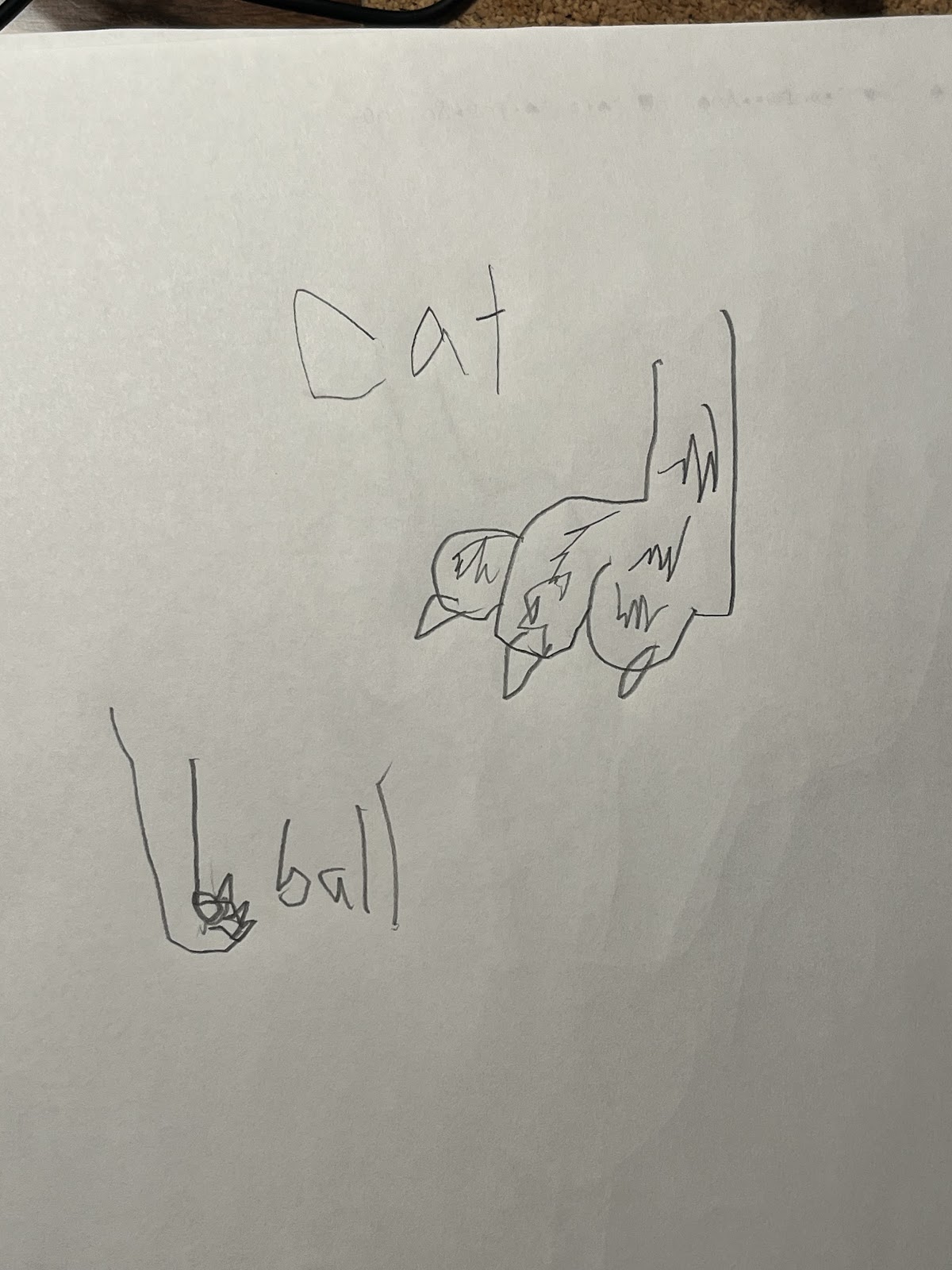
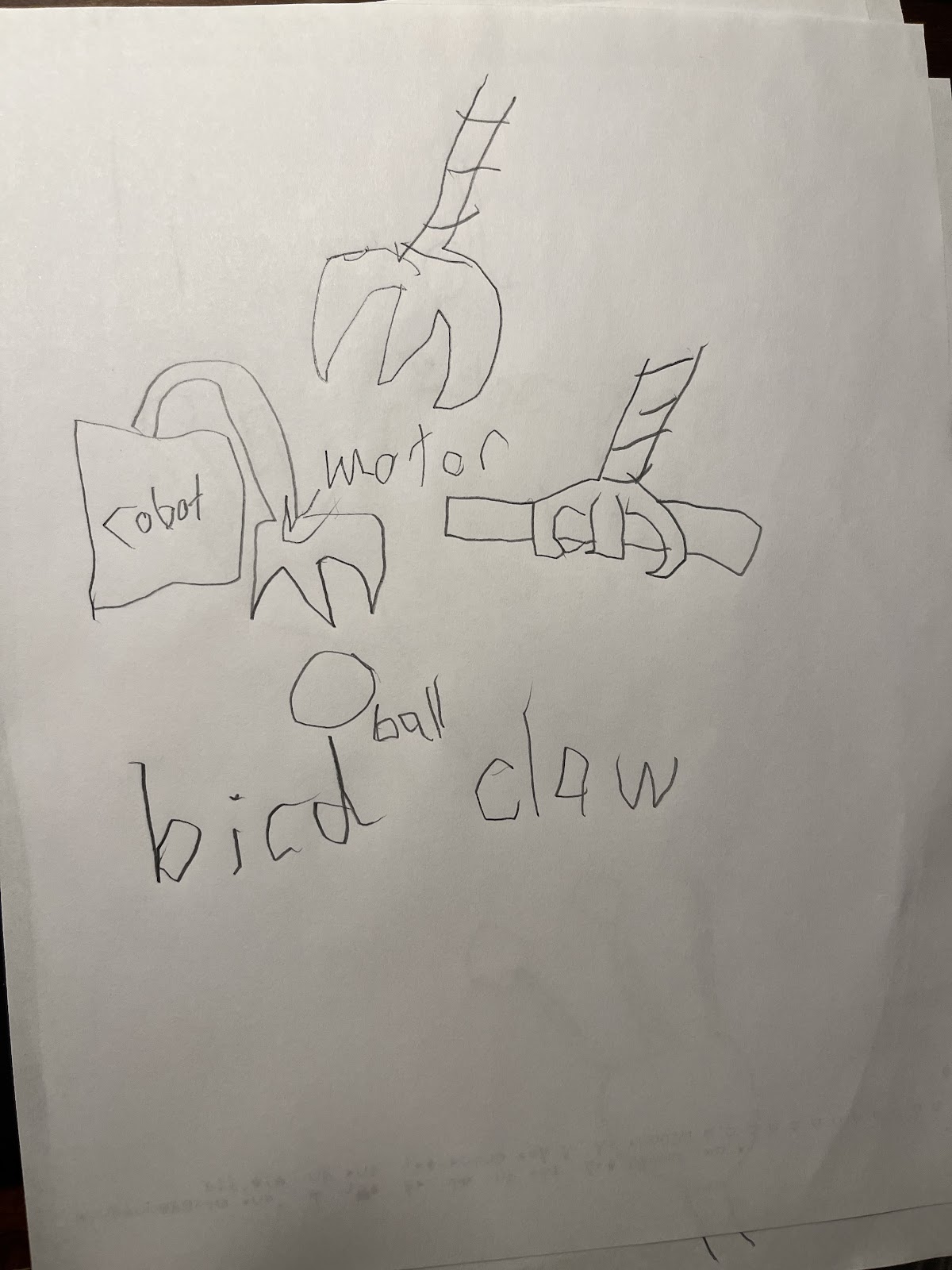
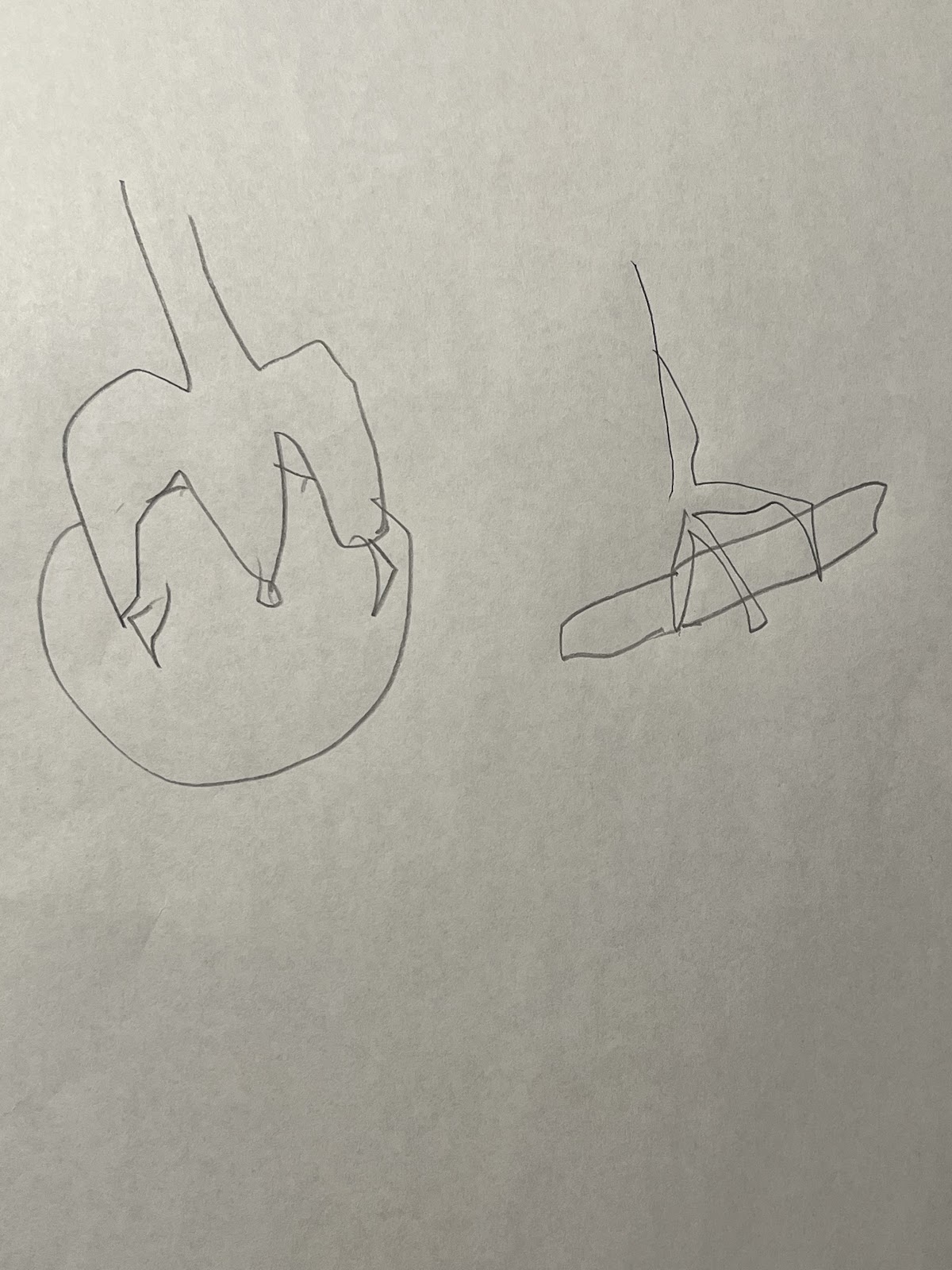
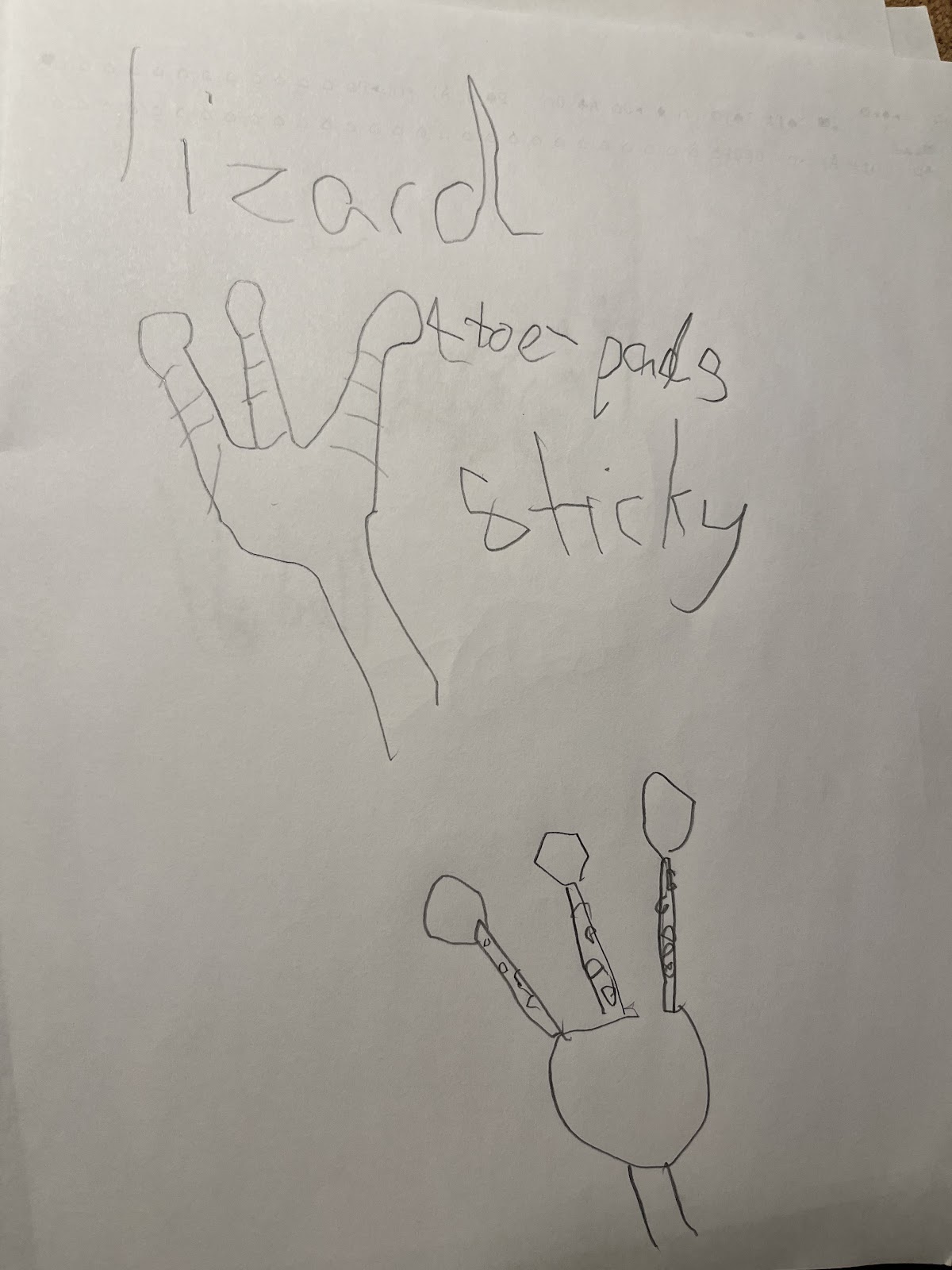
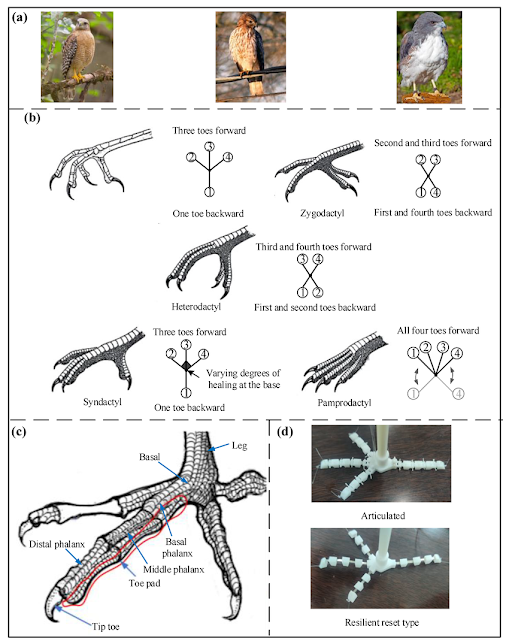
Over the past weekend, I volunteered at Herndon Fortnightly Library again. This time, we focused on getting inspiration for designs based on animals in real life. Lots of scientists and researchers are able to invent new theories and inventions by observing nature. For example, the first airplane was modeled after a bird! The most important concept isn’t to simply observe the animal anatomy and reproduce it, but to understand why the anatomic feature works and use it to create an original design. I brought pictures of different animals' claws and paws since the final task was to be able to grab a plush ball. The kids could choose from a variety of lizard, cat and bird paws/claws to draw and try to figure out how it worked. After they got a good sense of the mechanics, they had to figure out how to implement their design practically. The main focus of this section was exercising the kids’ creativity and to try to get them to come up with their own original design. Overall, everybody had tons of fun drawing and building from scratch! 


        This is an example of how to break down a bird’s claw and figure out its mechanics.              This diagram goes in detail with many different types of bird claws such as heterodactyl            (2 talons in front, 2 talons in the back), syndactyly (3 talons in front, 1 talon in the back)          and pamprodactyl (4 talons in front) claws. 

Sunday, December 8, 2024

Early evolution of small body size in Homo floresiensis

By: Yousuke Kaifu, Iwan Kurniawan, Soichiro Mizushima, Junmei Sawada, Michael Lague, Ruly Setiawan, Indra Sutisna, Unggul P. Wibowo, Gen Suwa, Reiko T. Kono, Tomohiko Sasaki, Adam Brumm & Gerrit D. van den Bergh

This paper talks about hominid bones unearthed in the So’a Basin in Central Flores, Indonesia. Fragments of a mandible and 6 different teeth belonging to a small hominin were discovered in the sandstone layer of the Mata Menge site. These fossils are dated to between 0.65 and 0.773 Ma. They share morphological similarities to H. floresiensis from Liang Bua (Western Flores) and H. erectus from Java. The fossils seem to be the ancestor of H. floresiensis and are theorized to be dwarf descendents of H. erectus.

Evidence of this link is that the mandible and teeth found at the Mata Menge site are smaller than those found in H. floresiensis from Liang Bua. This hints that these bones may have existed more than 600,000 years before the oldest H. floresiensis fossils found. Unfortunately, due to a lack of cranial bones found in the Mata Menge, there is limited data on body size evolution on Flores. This paper analyzes an adult humerus found later in the same Mata Menge site and concludes that it is morphologically more similar to a Homo species such as H. naledi rather than an Australopithecus. A molar crown also shows similarities to H. erectus rather than early African Homo. These analyses support the fossils being classified as early H. floresiensis. It also provides evidence that between -1.0 and 0.7 Ma, the ancestor of H. floresiensis went through a drastic size reduction from its larger bodied ancestor H. erectus.

More specific data illustrates the smaller body size of H. floresiensis through the discovered humerus and teeth. Scientists believe the humerus from specimen SOA-MM9 belongs to an adult due to its cortical bone histomorphology. Cortical samples were taken from the mid-posterior shafts of the humerus and compared to a modern human sample. The Osteon Population Density (OPD) and Haversian Canal Index (HCI) of the fossil (OPD = 16.5, HCI = 0.85) were greater than any modern human subadult humerus (OPD = 0.0-8.9, HCI = 0.0-0.63). This indicates that the bone specimen came from a mature adult, not a child. Conditions like osteogenesis imperfecta, which results in a shorter stature, could be ruled out since those with the condition display lower than normal OPD values. The humeral size of the Mata Menge fossil is smaller than any other adult individual of small-bodied fossil hominins such as H. naledi. The Mata Menge humerus’s minimum circumference is 46 mm which is less than the smallest humeri for prehistoric humans (46.5 mm). Its centroid size is also the smallest compared to any known adult specimen of Australopithecus, Paranthropus, H. naledi and H. floresiensis. 

In the end, researchers concluded that there were at least 4 individual’s remains found in the Mata Menge site, 1 adult, 1 adolescent/ young adult, and 2 children. All 4 of these specimens displayed an extremely small body size for their age. This shows that small body size was not an individual characteristic, but rather a population characteristic. Possible theories  to explain the small stature could be due to a lack of predators. Flores was so isolated that there were no natural predators for early H. floresiensis. Having a larger body size would be a disadvantage evolution wise as larger bodies require more energy and food to sustain itself.


Link to the paper: https://doi.org/10.1038/s41467-024-50649-7 

Creative Common license: http://creativecommons.org/licenses/by/4.0/ 


Tuesday, November 19, 2024

Antigone Comic

I created this comic after reading the play Antigone by Sophocles. Using a theme from the book, I applied it to a modern day conflict. I chose the theme of authority and applied it to the topic of abortion. This is a relevant topic considering the current controversy concerning a woman’s right to abortion. In 2022, the Supreme Court overturned Roe v. Wade and allowed each state to regulate abortion. Certain states such as Texas and Oklahoma have placed strict restrictions that make it nearly impossible to attain an abortion even if the mother’s health is threatened. 

Doctors are sometimes confronted with a difficult dilemma - uphold the Hippocratic Oath to provide the best medical care for their patients vs. obeying strict state laws forbidding abortion. Violating the strict abortion laws can be punished with imprisonment or losing one’s medical license. I find this topic interesting and want to discuss conflicts and situations that could unfold due to this disagreement in authority. In particular, I want to illustrate the moral distress doctors confront.

Friday, October 18, 2024

RISE: Rise In Steam Exploration

This weekend, I volunteered at Herndon Fortnightly Library as part of my nonprofit organization. I have been volunteering at Fairfax County Libraries for several years. This fall, my friends and I formed our own 501(c)(3) foundation to expand our outreach. I am so excited to expand my organization and bring more opportunities to my community. 

This past Saturday, we held a robot design and build workshop. This session, we focused on building robots with a strong base and defense for battle. The kids had lots of fun brainstorming creative ideas and practicing their problem solving skills. Volunteering at events like this is really rewarding and I appreciate being able to connect and benefit my community. I also enjoy being able to provide opportunities to kids who can't afford expensive camps. It was great to see how the kids worked together and implemented their ideas before competing at the end. I'm so excited to be able to continue doing events like these in the future!

Here are some pictures:


Sunday, October 6, 2024

I, Eye

This is a drawing I did of my own eye! I find eyes fascinating since they are known to be the “windows to the soul”. It’s amazing how this sensory system is processed by the visual pathway. I can’t wait to learn more about features like the eyes and how they work in context with the human body!


Friday, September 6, 2024

Rising Star H. naledi remains

I am a new subscriber to National Geographic! The first article that caught my eye is about the Rising Star Caves. I found this article interesting due to the many possible theories scientists developed to explain why H. naledi remains were found so deep in the Rising Star caves. The main topic was the discovery of nearly 2,000 H. naledi bones in the Rising Star and how the H. naledi bodies got there. The cave is full of narrow crevices, vertical drops, and suffocating tunnels making exploration a dangerous task. 


One of the most notable theories of why H. naledi bones were in the caves is that the H. naledi may have carried the dead into the caves as a burial ritual. This theory suggests that other species besides Homo sapiens bury their dead which would completely alter our understanding of H. naledi culture. Another plausible theory was that the H. naledi lived inside the caves. This theory is plausible because the H. naledi are of shorter stature than the normal human. In fact, female scientists have been able to navigate their way through complex caves because of their small stature. Perhaps hiding in the Rising Star caves provided protection and shelter from large predators. Maybe Leti was found so deep into the tunnel system because she got separated from her family and got lost. 


This article focused on H. naledi bones found inside the twisted and narrow Rising Star caves and speculated on how the bones got there in the first place. The two main theories are that H. naledi purposefully buried their dead in the caves to honor them or that H. naledi lived in those caves. I think the H. naledi lived inside the caves since it would provide them with ample protection and their smaller stature would make navigating the tight curves easier. It would be so exciting to follow this project and see what we learn about H. naledi and their culture/society in the near future. 


This is the link to the article I read! 


https://www.nationalgeographic.com/science/article/ancient-childs-bones-deepen-mystery-of-enigmatic-human-relative?loggedin=true&rnd=1726793088772 


Makeup and Face Transplants

A fascinating question Fay Bound-Alberti asks in The Face: A Cultural History is about face transplants and how much of your identity is ti...